What is Ausbildung in Germany? Complete Guide for Indians 2026
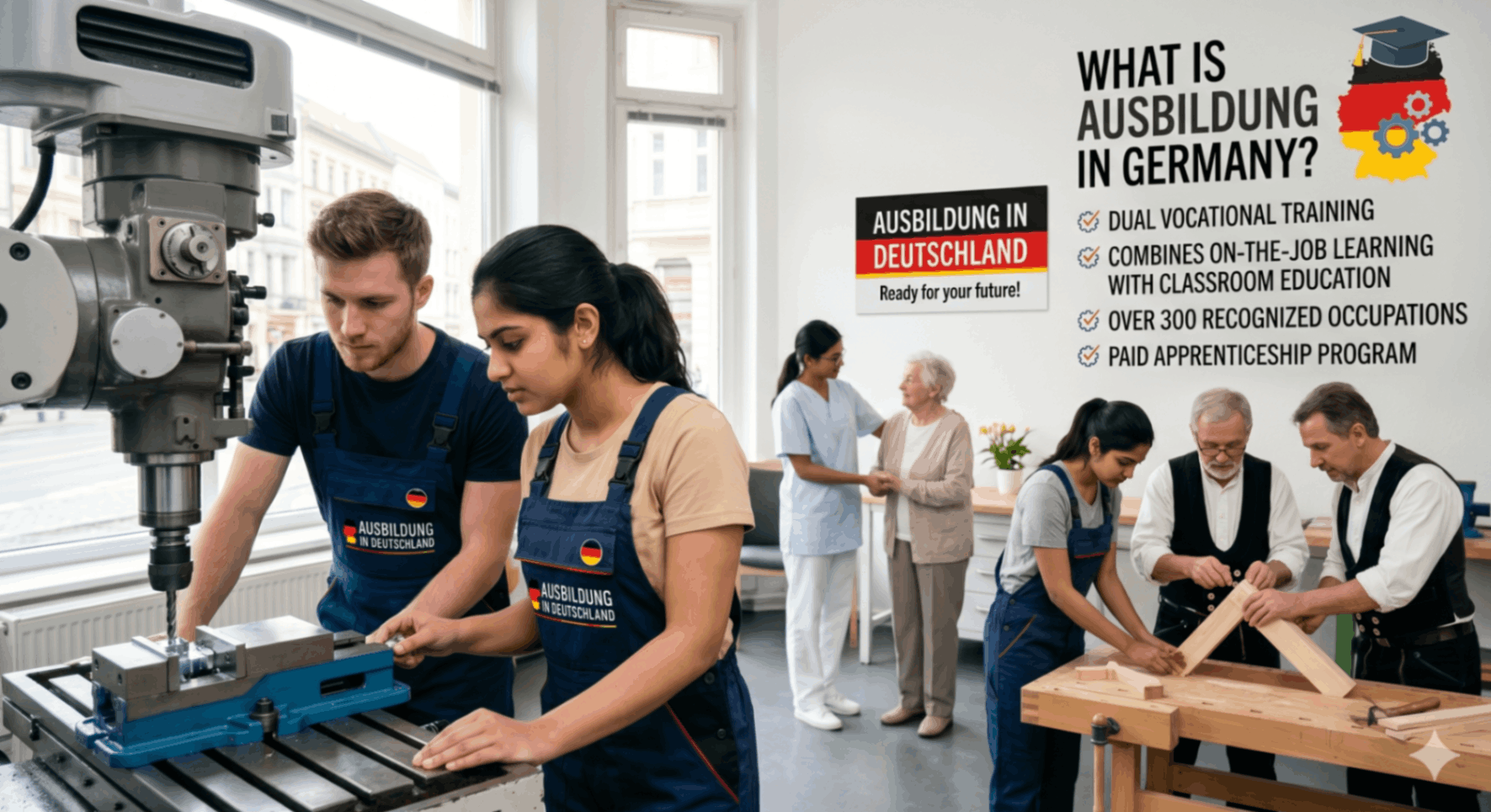
It is the German vocational system of training, referred to as Ausbildung, is among the most well-organized and respected routes to a career in Europe however, it is rather unknowledgeable to the majority of Indian professional and students seeking job opportunities abroad. Contrary to conventional degrees in the academic field, Ausbildung combines classroom-based theoretical instruction with intensive work-based education, resulting in highly-qualified professionals with skills and experience in their field of study. This dual-education model is the basis of Germany’s economic prosperity creating the highly qualified workforce that is the driving force behind its technological excellence, manufacturing capabilities and competitiveness in the service sector. For Indian applicants looking for alternatives to traditional university education or to pursue careers in Germany understanding German’s Ausbildung system is crucial. A lot of prospective applicants get assistance from an ausbildung agency in Delhi which specializes in navigating the process of applying including documentation requirements, application forms, and visa procedures that are associated to German educational programs for vocational students.
The Structure and Philosophy of Ausbildung
Ausbildung, which literally translates to “training” or “education” in German, is a formalized vocational education system regulated under the Vocational Training Act (Berufsbildungsgesetz). The normal duration of the program spans three years, although certain specializations need three years, while certain jobs that are not as complex are completed in two years. The typical trainee spends up to four days a week in a workplace working in a hands-on environment under the guidance by qualified mentors, with the remaining 1 to 2 days of instruction in vocational institutions (Berufsschule). The model of apprenticeship covers around 350 recognized training positions across a range of industries, such as hospitality, healthcare, technological information, mechanical engineering logistics, electrical engineering, administration as well as skilled trades. Based on the Federal Institute for Vocational Education and Training around 1.29 million students were taking part in dual vocational education programs in Germany through 2024 proving that the system’s relevance is still strong despite the increasing number of university students. The rate of completion for Ausbildung courses is typically approximately 75%, which is significantly over the 65% rate of completion of bachelor’s degrees in Germany.
Financial Aspects and Living Costs
One of the most appealing benefits for international students is that the trainees are paid monthly payments from their employer firms throughout their training period which is distinct from unpaid training programs or tuition-charging internships. Salaries for training differ significantly based on the type of job, size of company as well as the location and whether or not the employer is a member of the collective bargaining agreement (Tarifvertrag). The first-year salaries for Ausbildung typically are between EUR800-1,200 in gross monthly rising gradually to EUR950-1400 in the following year, and EUR1,100-1600 in 3rd year. Particularly well-paid sectors include banking and insurance, where first-year students typically earn between EUR1,200 and €1,400 and industrial manufacturing, which includes pharmaceutical and chemical companies that might offer EUR1,100-1,300 and public sector jobs with standardized pay scales that guarantee EUR1,218 for the first year, as 2026. The salaries for training, although low according to German standards, are usually sufficient to meet the basic expenses in smaller cities even though those in more expensive urban areas such as Munich or Frankfurt might require additional savings or part-time employment. Costs of living per month for single persons in Germany can range from EUR850-1200 based on the area, and include the cost of rent (EUR400-700 for shared accommodations) as well as medical insurance (approximately EUR110 for students under 30) and food (EUR200-300) as well as transportation (EUR50-90 which includes student discounts).
Eligibility Criteria for Indian Candidates
Indian youngsters and students must satisfy specific requirements to be eligible for education programs in Germany. Education prerequisites require the minimum completion of 10 years of education similar to German Realschulabschluss. This typically means completing class 10 of Germany’s Indian education system, although the completion of class 12 is highly desired and is required by a lot of employers. Age limits vary by business and job, with most job openings for training targeting people who are between 18-30 years old, but legally, there are no higher age limit for participation. German proficiency in the language at a B1 is the minimum requirement to be approved for visas, but B2 certification can significantly increase efficiency and success in workplace integration. In the Federal Employment Agency requires B2 certification for certain professions that are regulated, which includes healthcare professions. Candidates must obtain a formal contract for training (Ausbildungsvertrag) from an German firm prior to applying for an Ausbildung visa which is the most difficult challenge for applicants who do not have direct contact with German employers. A specialist ausbildung agency in Delhi will significantly simplify the process as these agencies are in contact with German businesses that are actively seeking international students and are able to assist with introductions, applications and arrangements for interviews that are hard for individual applicants to manage in India.
Application Timeline and Visa Process
The Ausbildung application process in Germany typically runs from twelve to 18 months prior to beginning of the training program, with most courses beginning in September or August, which coincides in the German academic year. However, certain companies provide February beginning dates. The largest companies and the most sought-after training jobs often end applications in January in preparation for the September intake, whereas small and medium-sized enterprises might continue hiring into the month of June or July. The application process involves submitting a comprehensive package including curriculum vitae formatted according to German conventions, motivation letter (Bewerbungsschreiben) explaining interest in the specific occupation and company, certified copies of educational certificates with official translations, German language proficiency certificates, and sometimes additional assessments or work samples depending on the field. The successful candidates are issued a formal contract for training that specifies pay, duration, schedule, and a training plan. Visa applications require this contract for training along with the evidence of German proficiency, proof of funds to pay for the initial expenses of living (blocked account or guarantee from employer) and full health insurance coverage, and a confirmation of accommodation in Germany. The processing time are at the German Embassy in New Delhi typically span 8-12 weeks, but delays may be as long as 16 weeks during times of high demand, which makes prompt application submission essential.
Career Prospects After Ausbildung Completion
The completion of an Ausbildung program offers a range of options for career opportunities within Germany as well as throughout all of the European Union where the qualification is recognized by EU directives on vocational training. The statistics of the Federal Employment Agency indicate that about 70 percent of Ausbildung graduates receive offers of employment from their training firms following their completion, ensuring the immediate security of employment. If they are not accepted by their employers of training typically have a second job offer within weeks, given the ongoing skill shortage in the majority of professions. Beginning salaries for newly-qualified vocational professionals generally vary from EUR2,400 to 3,200 monthly gross according to the region and occupation and region, rising to EUR3,000-4500 in five years’ work. Opportunities for advancement include specialization via Meister (master craftman) qualifications that require an additional two years of education and examination, and Techniker (technician) certifications that can be obtained through evening classes while working or university admission by way of vocational qualification pathways that allow the pursuit of a bachelor’s degree with no Abitur. The residence permit issued for Ausbildung can be converted to employment-based residence and ultimately permanent settlement (Niederlassungserlaubnis) after five years of legal residence, creating a clear immigration pathway for Indians seeking long-term European residency.
Taking Your First Steps Toward Ausbildung
The Ausbildung system gives Indian candidates a unique chance to build relevant capabilities and get European job experience, as well as build lasting career paths in Germany by following a financially viable path that doesn’t require tuition costs. It is important to plan ahead for a thorough German study, careful analysis of the right jobs to match your qualifications and interests and an effective application to businesses that have a track record of hiring international students. It doesn’t matter if you’re navigating the process yourself or working with an expert ausbildung agency in Delhi for support with application and guidance on placement, Indian candidates who invest time learning about the system, complying with the requirements for language proficiency, and showing an interest in vocational careers are positioned to benefit from Germany’s warm and welcoming environment for international candidates pursuing the route.
